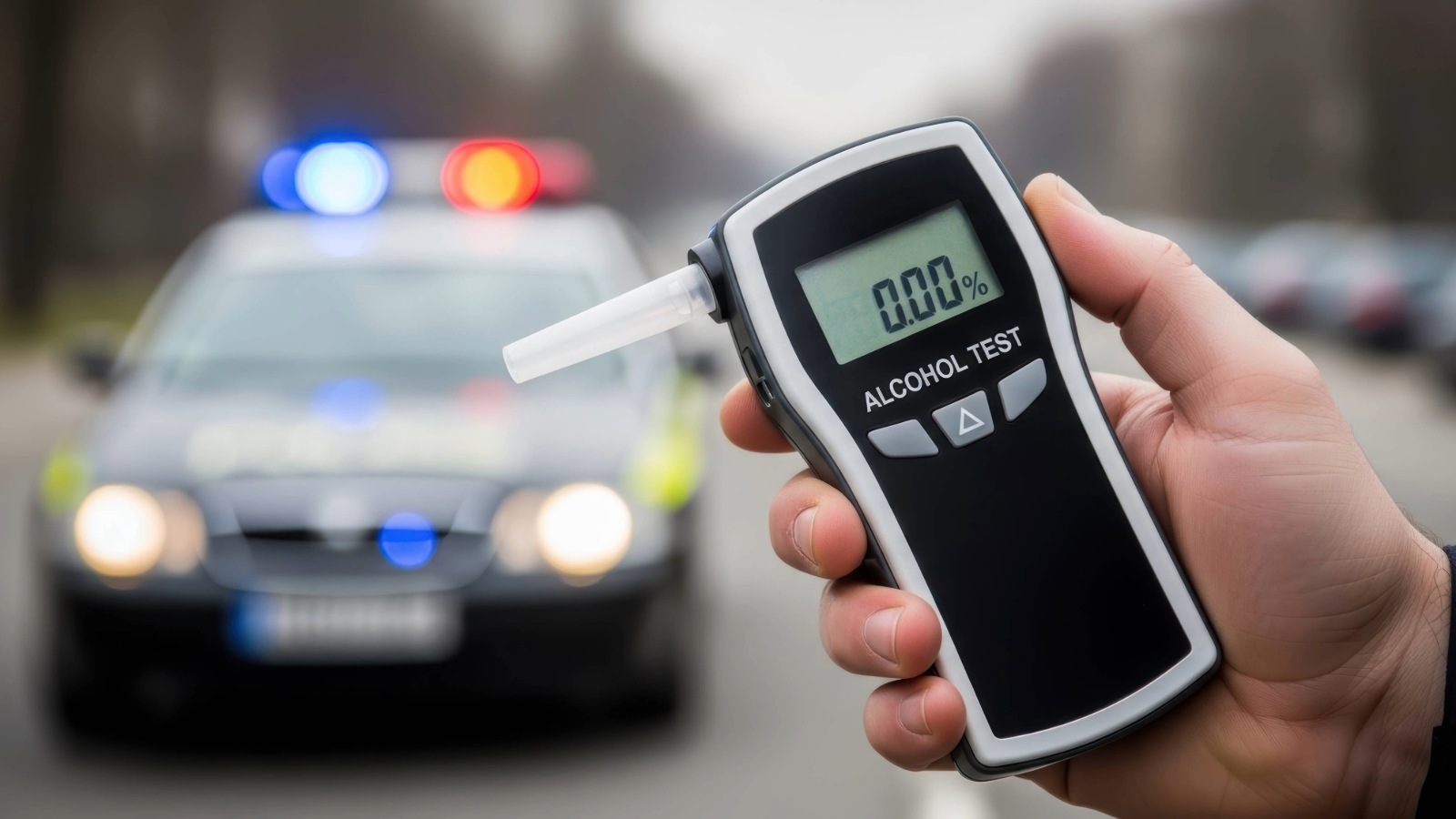
One word that pops up frequently in Colorado driving under the influence (DUI) cases is “Intoxilyzer.” However, many people are not familiar with the meaning of this word of how it affects a DUI case. This blog post and subsequent ones intend to address the Intoxilyzer and its value for the prosecution in cases involving impaired vehicle operation.
Drivers on Colorado roadways are presumed to have consented to providing samples of either their blood or breath for testing purposes if police officers have probable cause to believe they are operating a vehicle under the influence of alcohol. This is commonly referred to as “Express Consent.” If the driver agrees to provide a sample and opts for the breath test, this will be performed on an Intoxilyzer.
The Intoxilyzer is simply a breath test machine – it measures the blood alcohol concentration (BAC) of an individual through a breath sample. The most widely used version of this machine is the Intoxilyzer 9000, and it is manufactured by CMI Intoxilyzer of Owensboro, Kentucky.[i]
Under Colorado law, a driver commits DUI when his or her BAC is 0.08 or greater at the time of driving or within two hours after driving.[ii] This is called “DUI – per se.” In other words, there is a presumption through some scientific, measurable evidence that the driver was intoxicated. This measurable evidence comes from Intoxilyzer.
Colorado case law states that Intoxilyzer results are generally accepted as accurate as long as certain conditions are satisfied by the police and prosecution: “Intoxilyzer test results are presumed accurate if the test was conducted by a certified operator in accordance with Health Department regulations on a machine shown to be operating correctly at the time of the test.”[iii] From this holding we learn there are three potential ways to attack Intoxilyzer test results: (1) the law enforcement personnel operating the machine were not properly certified; (2) the test results were not performed in accordance with state agency rules and regulations, and (3) the machine itself was not operating properly at the time of the test.
Colorado utilizes the Intoxilyzer 9000 as the “Evidential Breath Alcohol Testing instrument” used to measure a suspect’s breath to determine if he or she is driving under the influence.[iv] The phrase “Evidential Breath Alcohol Testing” are not some random words used by the State of Colorado, either. This phrase describes a program used by the State of Colorado – EBAT (for “Evidential Breath Alcohol Testing”) – which is run by the Colorado Department of Public Health and Environment (CDPHE), and is described as follows: “[t]he Evidential Breath Alcohol Testing (EBAT) program repairs, calibrates and certifies the Intoxilyzer 9000 (I-9000) instruments used statewide to test subjects suspected of driving under the influence of alcohol.
The EBAT program also trains and certifies law enforcement officers who perform these tests using the I-9000.”[v] All this means is that Colorado’s EBAT program is responsible for maintenance and certification of the Intoxilyzer 9000 machines, and also trains and certifies police personnel in the machine’s use. Therefore, police departments must maintain accurate records on both the machine’s maintenance (which reflects upon its accuracy) and the training of personnel on the device’s use. Failure to maintain these records could provide avenues for defense attorneys to seek exclusion of test results obtained against a DUI client.
The accuracy of the Intoxilyzer 9000 has been advertised as “±3% or ± .003 grams/210 liters (whichever is greater).” What does this mean? If an individual provides a breath sample and the measurement is 0.09, then the best estimates of the true and accurate reading for the suspect are 0.087 to 0.093 – still within the legal definition of “driving while intoxicated” because both measurements fall above 0.08. However, if the suspect is measured by the machine as 0.08, then the most accurate measurement of the individual’s BAC is 0.077 to 0.083. Legally, the suspect may or may not have been DUI for statutory purposes. This explains why knowing the margin of error can be a critical factor when defending an impaired driving case.
In future blog posts on the Intoxilyzer subject, we will discuss issues regarding machine accuracy and performing the tests on subjects using the device.
[i] https://www.alcoholtest.com/intoxilyzer-9000/
[ii] § 42-4-1301(2)(a), C.R.S.
[iii] Davis v. Charnes, 740 P.2d 534, 535 (Colo. App. 1987)
[iv] https://cdphe.colorado.gov/laboratory/ebat/intoxilyzer-resources
[v] https://cdphe.colorado.gov/laboratory/ebat/evidential-breath-alcohol-testing