Lakewood is Jefferson County’s largest city, and it sits on some of the west metro’s busiest roads: Wadsworth Boulevard, Kipling, Colfax, Alameda, and US 6 (6th Avenue). If you were hurt in a crash in Lakewood, here is what recent state and city data shows, what is changing on local roads, who investigates, how to get your report or video, and how a Colorado injury claim works.
How many people die in traffic crashes in Lakewood?
According to preliminary data released by the Colorado Department of Transportation in January 2026, 16 people were killed in traffic crashes in Lakewood in 2025, down 24% from 2024. That still placed Lakewood fifth among Colorado cities for traffic deaths, behind Denver, Aurora, Colorado Springs, and Pueblo. Jefferson County as a whole recorded 47 traffic deaths in 2025, down 13%. Statewide, 701 people died, and CDOT reported that impaired-driving deaths rose 11% and pedestrian deaths rose 5%. Lakewood is also part of the Jefferson County Vision Zero Safety Action Plan, a county effort to identify where serious crashes happen and how to prevent them.
What is happening at US 6 and Wadsworth?
In late October 2026, CDOT and its contractor began the remaining reconstruction of the US 6 and Wadsworth Boulevard interchange in Lakewood. CDOT says the old cloverleaf will be replaced with a diamond design with longer on- and off-ramps, the US 6 bridge will be rebuilt, and work will run along Wadsworth between 4th Avenue and Highland Drive. The speed limit on US 6 between Garrison Street and Sheridan Boulevard is reduced to 55 mph for the duration of the project, and CDOT expects completion in late 2029. Lane shifts, temporary signals, and frontage-road closures are part of the plan. If you are hurt in a crash inside the work zone, the other driver may not be the only party involved: how the contractor set up signs, barriers, and lane shifts can matter, and claims involving a government agency carry special notice rules (see below).
Why are nighttime pedestrian crashes a concern in Lakewood?
The City of Lakewood reported in March 2025 that, after a fatal pedestrian crash on West 14th Avenue in July 2024, city traffic engineers and the Jefferson County Coroner’s Office reviewed nearly 40 pedestrian fatality cases. The review found crashes occurring at night, between intersections, where the driver was sober and driving reasonably but could not see the pedestrian in an unlit or shadowed stretch of road. The city installed flashing beacons on West 14th Avenue between Wadsworth and Garrison and applied for more than $1.83 million in CDOT safety funding for street lighting on Kipling Parkway (6th to 26th Avenues) and Wadsworth (Jewell to 26th Avenues). For an injured pedestrian or a driver, that kind of evidence (lighting, sight lines, where the crash happened) can be central to how fault is decided. See our guide to fault in Colorado pedestrian accidents.
Does Lakewood’s 20 mph neighborhood speed limit affect my claim?
It can. On September 23, 2024, Lakewood City Council adopted a 20 mph speed limit for residential streets. The city says the limit applies on local neighborhood streets even where no sign is posted, unless a different limit is posted; larger collector and arterial streets are not affected. If a driver hit you, your child, or your car on a residential street while going well over 20 mph, that speed can be important evidence of carelessness. Speed can be shown through the police report, vehicle event data, video, damage patterns, and witness accounts.
Who investigates a car accident in Lakewood?
For crashes on Lakewood city streets, the Lakewood Police Department generally responds and writes the crash report. Crashes on some highways, or in unincorporated Jefferson County outside city limits, may be handled by the Colorado State Patrol or the Jefferson County Sheriff’s Office instead. The investigating agency decides whether anyone gets a ticket, and insurance adjusters lean heavily on its report, so check that the report names the right agency and get the case number at the scene if you can.
How do I get a Lakewood police crash report or video?
The Lakewood Police Records Division releases traffic accident reports, photos, and video, and the city encourages requests through its online police-records portal. According to the city’s fee schedule, a written report costs $8.00 for the first ten pages, and payment must be received before processing begins; reports are not released the same day. The city also lists fees for traffic camera footage ($25 if booked into property, $50 if not booked and less than 30 days old) and body-worn camera footage ($45 per hour, one-hour minimum). The records line is 303-987-7331. For 911 recordings, the city directs requests to the Jefferson County Communication Center. Ask for video quickly: the city’s own fee schedule distinguishes footage under 30 days old, and private cameras at businesses can be overwritten.
What if I was hit by an RTD bus or light rail train in Lakewood?
RTD’s W Line light rail runs through Lakewood, with stations including Lakewood-Wadsworth, and RTD buses run on major corridors. Because RTD is a government entity, a claim against it is governed by the Colorado Governmental Immunity Act, which requires a written notice of claim within 182 days after the injury is discovered (C.R.S. 24-10-109). That notice is separate from, and earlier than, the deadline to file a lawsuit. The same notice rule applies to claims involving other public entities, such as a city vehicle or a claim about road conditions. Read more about RTD and bus accident claims in Colorado.
Can I still recover if I was partly at fault?
Possibly. Colorado follows modified comparative negligence under C.R.S. 13-21-111. If you are partly at fault, your compensation is reduced by your percentage of fault, but you cannot recover from a party whose fault is not greater than your own. In a crash at a busy Wadsworth or Kipling intersection, an insurer may argue that you were speeding, distracted, or entered on a late yellow to shift part of the blame onto you. Photos, video, witness statements, and vehicle data help answer those arguments. Learn more about comparative negligence in Colorado car accidents.
How long do I have to file a car accident claim in Colorado?
For a claim against another driver, the deadline to file a lawsuit for injuries from a motor vehicle crash in Colorado is generally three years under C.R.S. 13-80-101(1)(n). If a government vehicle or public entity is involved, the 182-day notice of claim under the Colorado Governmental Immunity Act applies first, and it is separate from, and much earlier than, the lawsuit deadline. Missing a deadline can end a claim no matter how strong it is. If your health insurance paid your medical bills, read about health insurance liens on car accident settlements before you settle, and if your neck or back pain started days after the crash, see our guide to whiplash and neck or back injury claims.
What if the other driver was drunk or high?
CDOT’s 2025 data shows impaired-driving deaths statewide rose 11% to 235. If an impaired driver injured you, the criminal case and your civil claim run separately, but evidence from the DUI case, such as test results and the arrest report, may help prove fault, and Colorado law may allow additional damages in some cases. See hit by a drunk driver in Colorado.
Talk to a Lakewood car accident lawyer
Mile High Legal helps people injured in crashes in Lakewood, Golden, and across Jefferson County and the Denver metro area. Contact us for a confidential consultation, or learn more about our car accident practice. Hurt in nearby Golden? See our Golden car accident page.
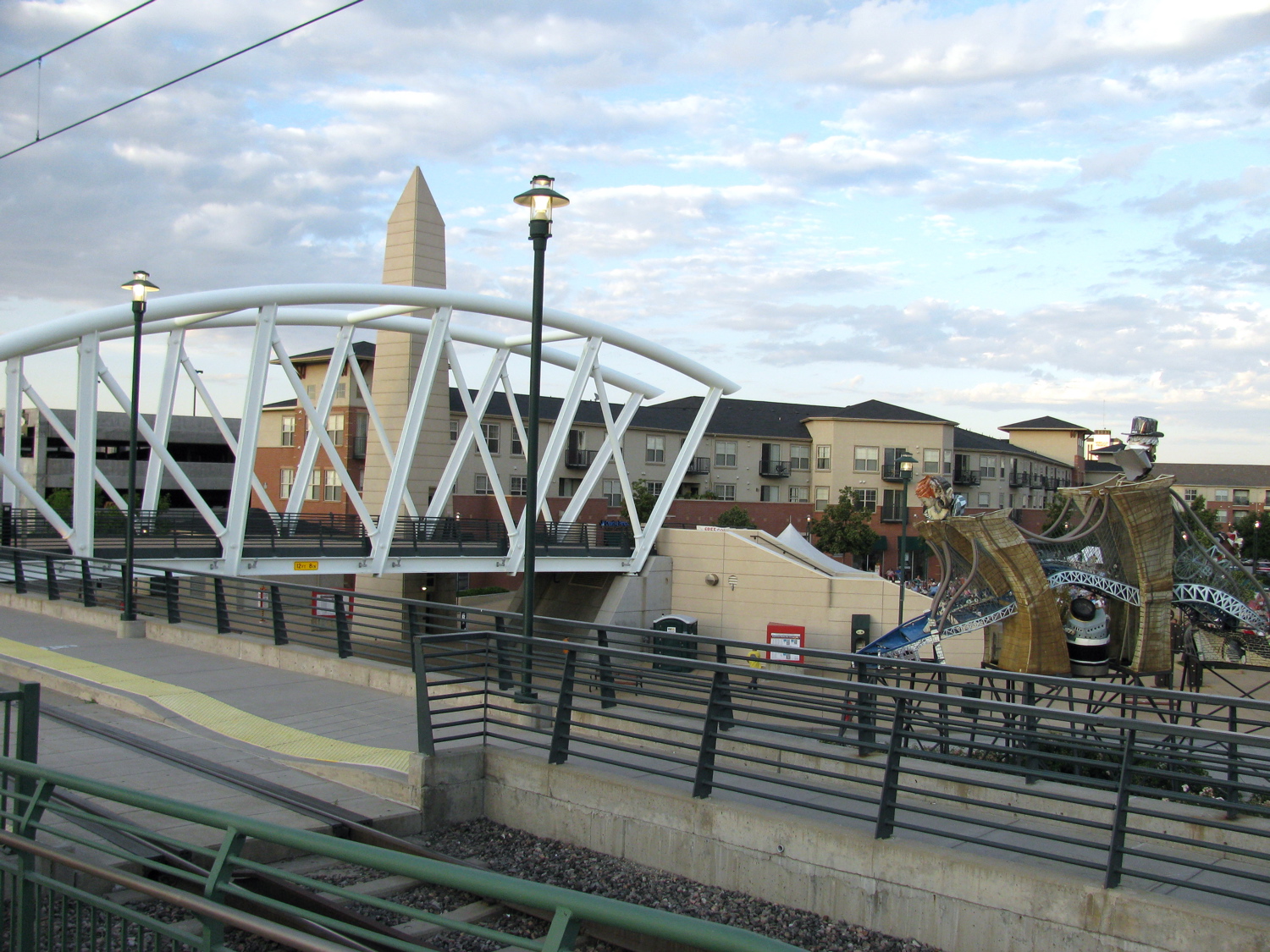
Header photo: “Lakewood–Wadsworth station from the north” by Xnatedawgx, via Wikimedia Commons, licensed CC BY-SA 4.0.
This page is general information, not legal advice, and does not create an attorney-client relationship. Past results do not guarantee future outcomes.